When a club is just beginning, with its members being strangers just months earlier, and students already say they’ve found a sense of belonging, it’s a sign that something meaningful is taking shape. That’s exactly what’s happening at Edmonds College, where students and faculty are reviving the school’s literary magazine in a way that is not only rebuilding a publication but creating a community.
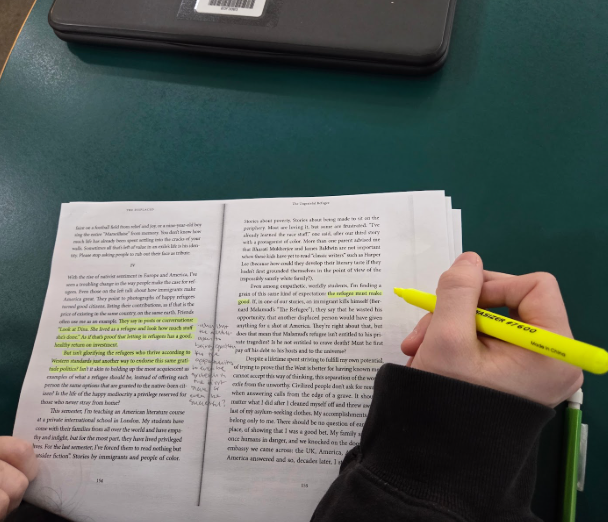
After six years without a literary magazine, students and faculty at Edmonds College are working to bring the tradition back. The new publication, “Literally! An Art and Literature Magazine,” is a student-led effort born out of the discontinuation of “Between the Lines,” the college’s former literary magazine that ran from 1978 until the pandemic halted its production in 2020. Unlike its predecessor, which existed inside a specific class, “Literally” is organized as a club, which is something the faculty say opens the door to more students.
“We are trying to be as cross-departmental as possible, hopefully even more so than the last one,” said faculty adviser Mindy Moos, who teaches in the English Prep Department. “Now that we’re doing it as a club, we’re hoping it opens it up to a lot more students who either couldn’t afford the tuition for an extra class or couldn’t fit it in their schedule. This one is a lot more flexible, but we do want to maintain a lot of those original connections, with the art department, for example.”
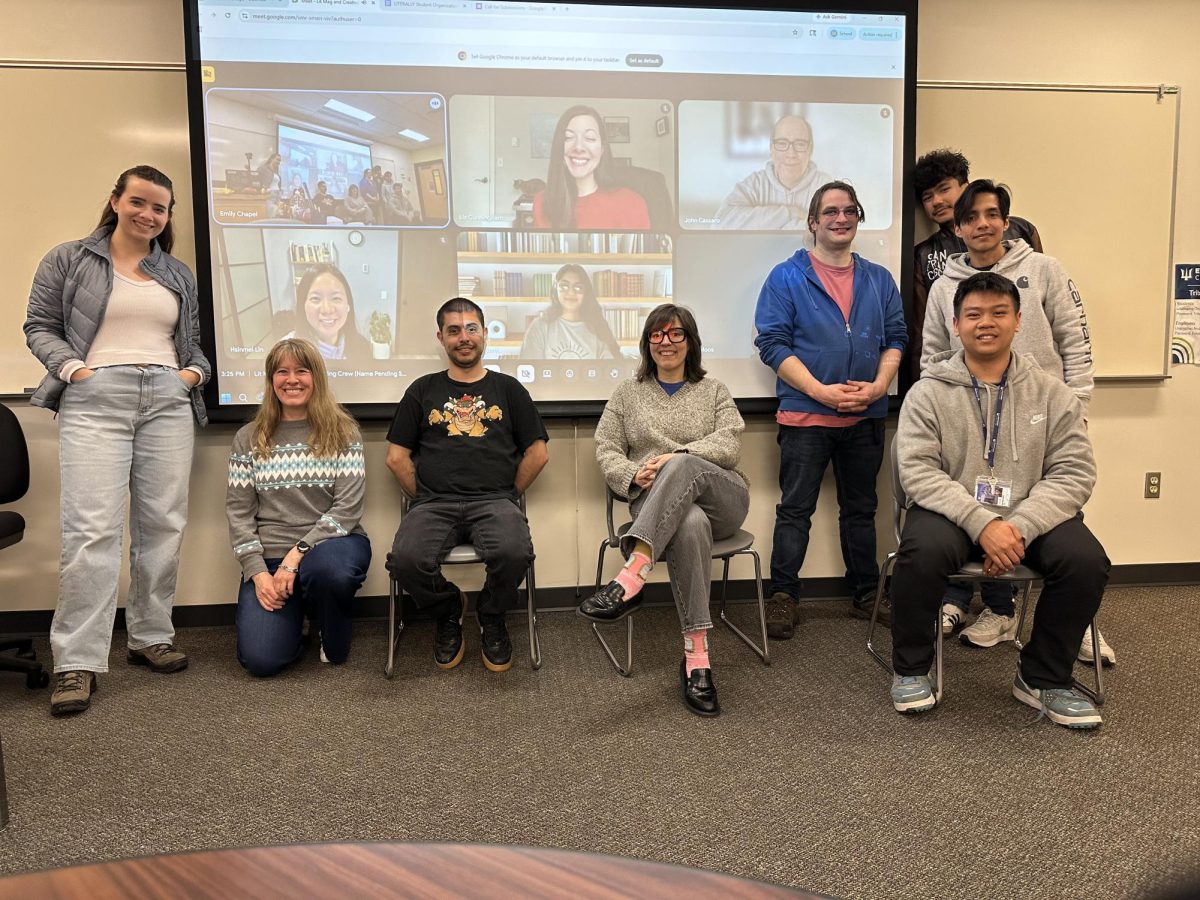
The club has already drawn strong interest. About 10 students regularly participate, filling roles such as editor-in-chief, editors, website managers, marketing team members, and writers. Others attend as their schedules allow. In addition, five faculty advisors are supporting the effort, which is an unusually high number for a student club. Despite that support, faculty emphasize that the magazine is truly student-run.
“Faculty advisers mainly support the students and provide tools…for the students to lead and manage the magazine successfully,” said faculty adviser Hsinmei (May) Lin, a tenured faculty member in the English department. “It’s super exciting and heart-warming to see how motivated and enthusiastic our students are.”
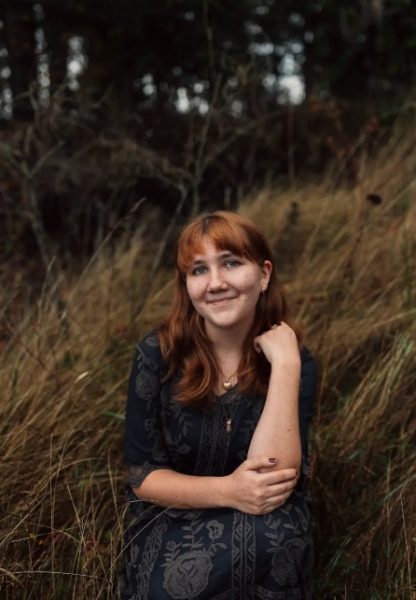
That enthusiasm is evident in how quickly the group has formed a strong sense of identity. Students even selected the magazine’s name themselves, which editor-in-chief Beatriz Viesca says reflects a broader vision. “The name ‘Between the Lines’ was very literature-oriented,” Viesca said. “Now, we aim to provide a balance between the artistic and literary world. We want a little bit of everything, so each student who picks up our magazine finds something of their own interest.”
While the magazine is new, the team is still looking to the past for inspiration. Moos hefted a copy of “Between the Lines,” which featured high-quality, full-color printing and a wide variety of work.
“I love the variety they have, and the way they printed it,” Moos said.
Due to limited funding, “Literally” will likely take a more modest approach at first, with color covers and black-and-white interiors. Still, students are studying the earlier publication carefully.
“Editors and marketing people in the club are looking at the old one to see what they want to maintain and what they think could be altered,” said faculty adviser Emily Chapel, who teaches in the School of Academic Foundations and the School of English Language Studies. “They’ve done a really good job of thinking long term.”
That long-term thinking includes features like “who we are” pages, designed to document contributors and preserve the magazine’s history as students graduate.
Even more central than the publication itself, however, is the sense of community the club is building.
“Community being the first, the biggest, central purpose of this magazine,” Chapel said. “The outcome of the magazine with incredible writers is kind of like a bonus.”
Faculty say the space has quickly become one where students feel comfortable sharing their work and ideas.
“It’s a place they are excited to show up to,” Moos said. “It’s a safe community, which is exactly what we were hoping for. There’s a lot of rough stuff in the world right now… so much negative stuff, so it’s all the more important that we try to be more inclusive. That’s really why we wanted to do this.” The club is intentionally welcoming to a wide range of students, including those new to campus or non-native English speakers.
For faculty and students alike, success isn’t just about producing a polished final product; it’s about creating lasting impact.
“Continuous community and collaboration, and students finding a place where they feel like they belong,” Chapel said, describing her hopes for the continued success of the magazine.
Other faculty echoed that sentiment.
“Seeing students take active roles early on has been nothing short of inspiring,” said John Cassaro, faculty member in the English Department. “Success would mean seeing students build their interests in the literary arts…long after their time working on the magazine.”
Elizabeth Cunningham, a full-time faculty member in the English department, added that she hopes the magazine will grow to include multiple issues, themed submissions, and even public readings and workshops.
Students, meanwhile, are balancing excitement with the realities of launching a new publication.
“I anticipate that the biggest challenges will be selecting and filtering what we publish,” Viesca said. “This process may require several iterations, especially around creative people where differences can be felt strongly.”
Still, Viesca remains optimistic. “In the best scenario, success would mean providing enough momentum in our first year to ensure the magazine continues,” Viesca said. “But to simply publish one magazine this coming year, I would consider it a success.”
Recalling similar projects at other schools, Moos said that the impact of a finished magazine goes far beyond the printed page. “The day the magazine came out was like Christmas. When I actually handed them the book, they were so happy.”
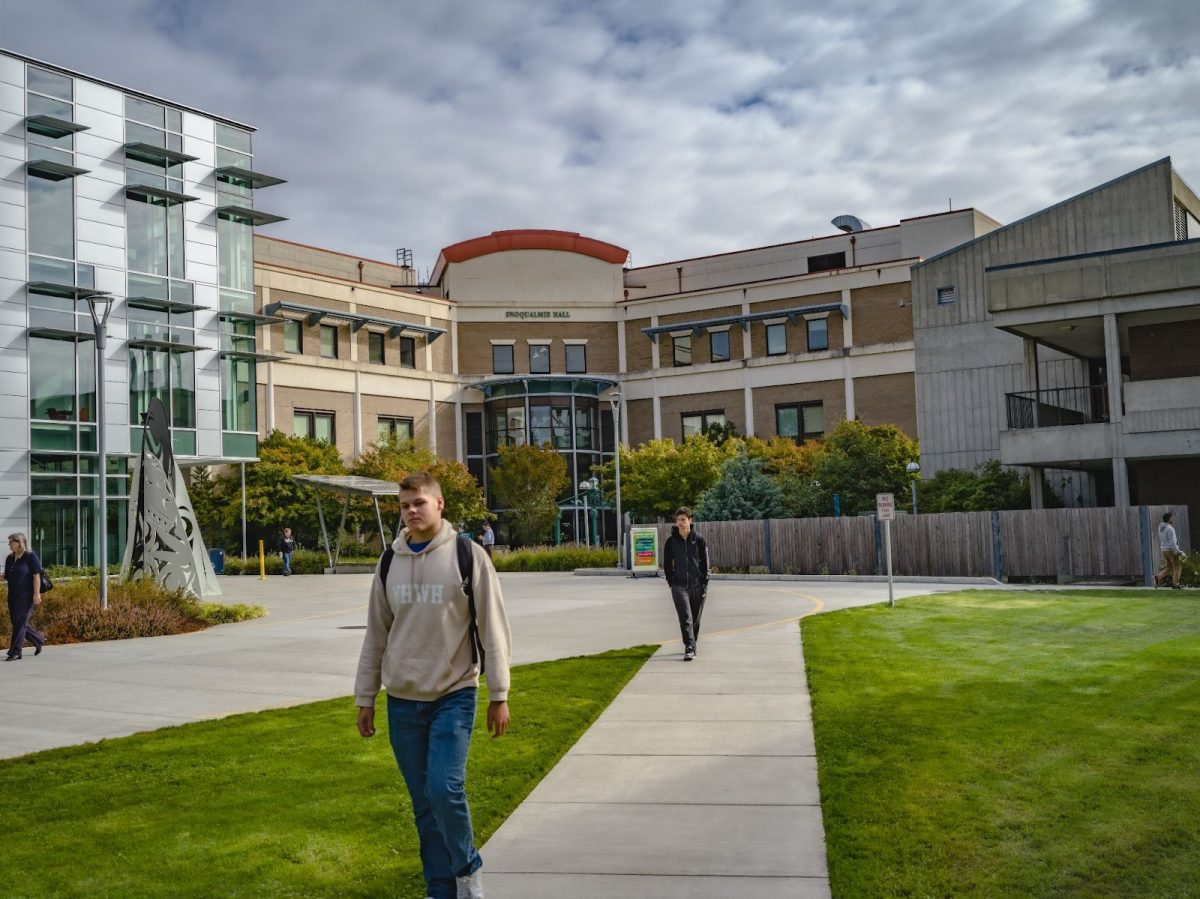
Students interested in joining “Literally” are welcome to attend meetings on Mondays from 2:45 to 3:45 p.m. in Mukilteo Hall, Room 215, except on days when the campus is closed. A call for submissions for the magazine is expected in the future.