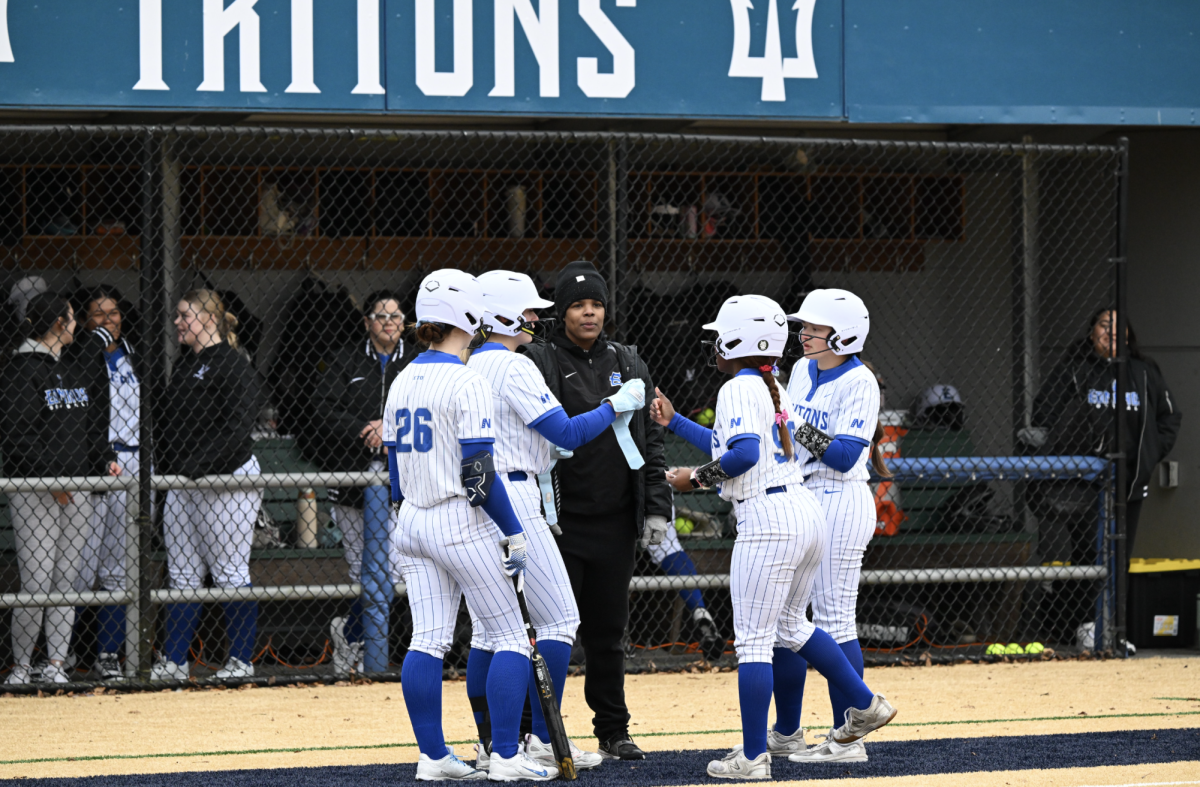
The sun beats down on the turf as The Edmonds College softball team stretches and jogs through pre-practicedrills. At third base, a player tugs her glove tighter, bounces on her toes, and takes a steadying breath before snagging a hard line drive as Coach Antionette Watson watches from the baseline. Most students only see the noise of game day, but it’s these quiet, everyday moments that build the team’s skill, focus, and trust.
“The goal isn’t just to prepare for the next game,” Coach Watson explained. “It’s to help players develop over time and learn to trust the process.”
This current season began last month and the preparation appears to be paying off. The team has started strong, logging five wins and one loss.
Every game is built on a routine that starts well before the first pitch, according to Watson. For the softball team, getting ready is as much mental as it is physical. Their practices are carefully organized to create consistency, refine skills, and improve communication among teammates. Repetition is central to this process, as players go through drills that might look basicbut are critical to staying composed and performing well under pressure.
Players on the team say that preparation continues long after practice is over. Many of them manageschoolwork, family or personal obligations, and training all at once, following a routine that requires focus, discipline, and strong time-management skills. Even with these demands, they point out that steady effort, not just innate ability, is what leads to real progress over time. Consistently showing up and putting in the work, especially when it feels hard, is what truly separates improvement from standing still.
Mental preparation is equally as crucial as physical training. Players say they use strategies such as concentrating on the next play, maintaining a positive attitude after mistakes, and relying on the hard work they’ve done in practice.Instead of fixating on errors, they quickly move on and stay involved in the game. This approach allows them to remain confident and composed when the pressure is high.
According to sophomore Kailee Gorospe, preparation begins long before she steps onto the diamond. She focuseson being mentally ready and sets small, specific goals for each practice to keep progressing. She explained that repeating familiar drills helps her stay composed and confident in games because the actions feel automatic. Fellow sophomoreEmersyn Bakker noted that what the team does together is equally important, emphasizing how ongoing communication and positive reinforcement during practice help build trust. Together, their perspectives show that competing successfully is not just about talent, but also about mindset, routine, and strong team relationships.
Watson explained that every practice is intentionally structured around what the team needs most. Each workouthas a clear focus, whether it’s sharpening defensive skills, improving hitting mechanics, or strengthening team chemistry. She also stressed the value of adjusting practices according to the team’s development so that players are consistently challenged while still gaining confidence.
Many students may not recognize this emphasis on the process rather than the outcome. Although games are usually the most visible aspect of sports, they make up only a small part of the total commitment. The real effort takes place during practices, conditioning workouts, and repeated drills that often happen out of sight.
As the season draws near, the team keeps putting in hours of work on the same fields students walk by each day. Their preparation points to a bigger truth: real success is built on steady effort, discipline, and faith in the process.
For these athletes, each drill, each practice, and every small step forward matters, long before the first game ever starts.
This season’s roster, game schedule, and statistics can be found here.