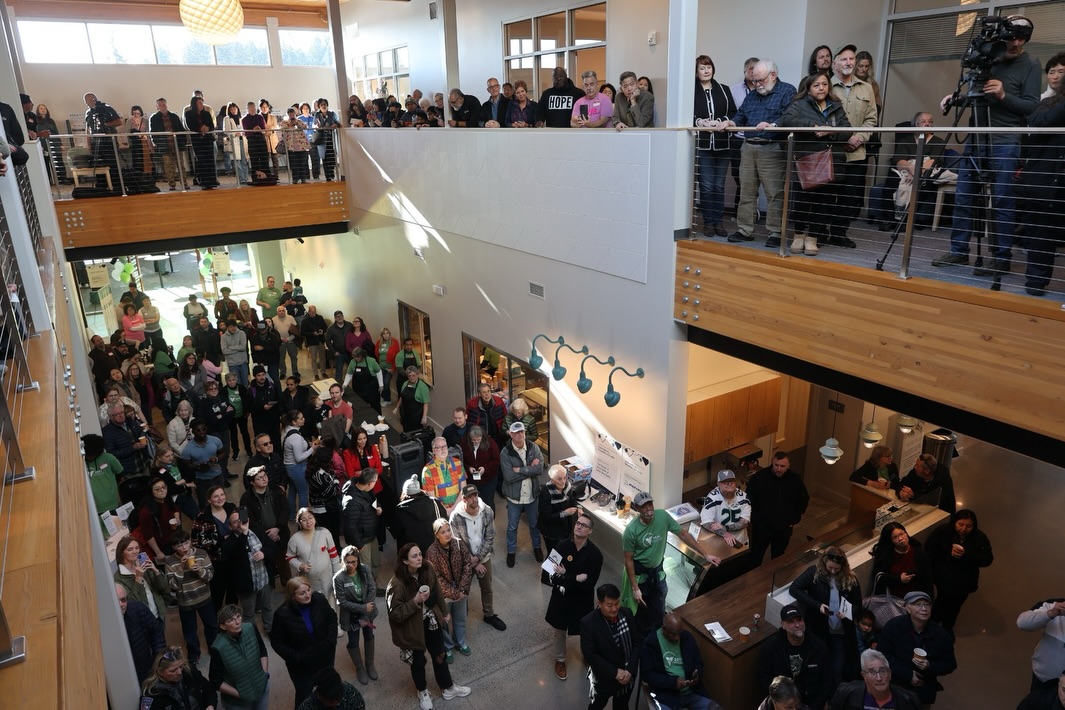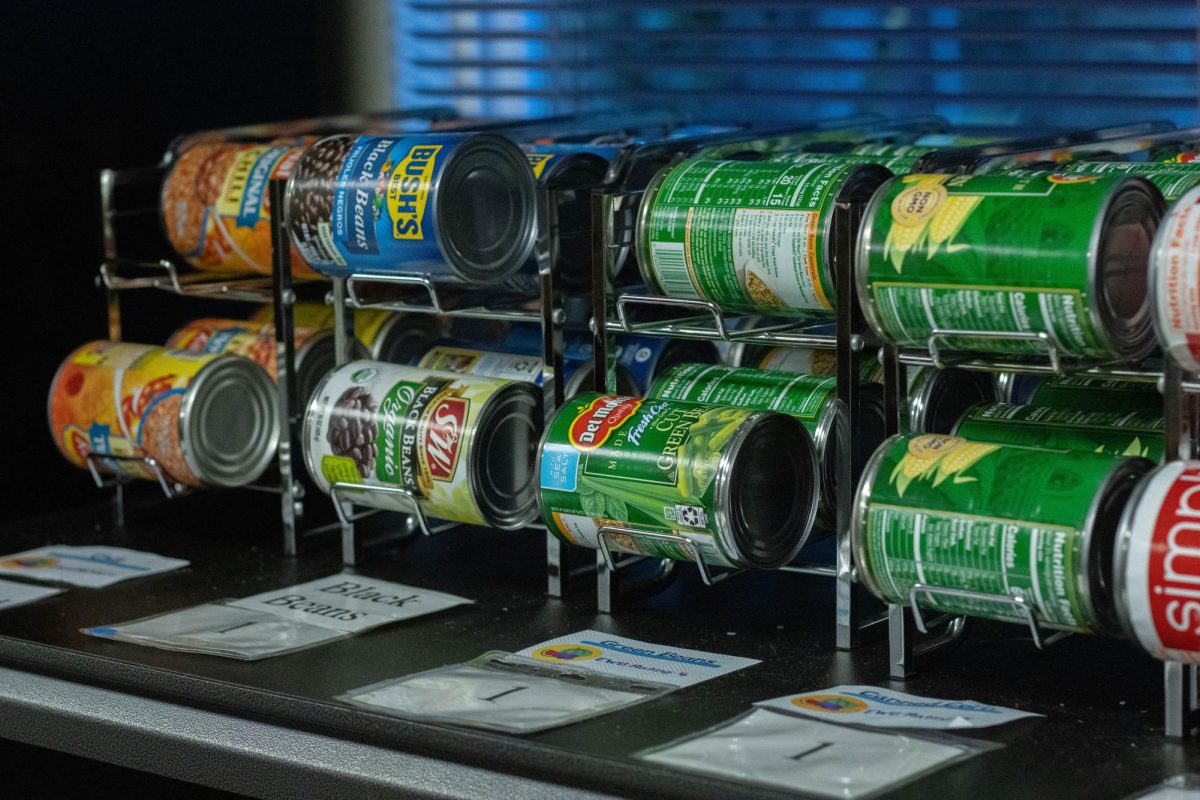
As the holiday season approaches and financial aid runs low, more and more Edmonds College students are utilizing the on-campus resources to meet their basic needs. The Edmonds College Food Pantry now serves about 225-250 students each week, with most students visiting on a weekly basis. Students can visit the pantry located in the Olympic building once per week for food and hygiene supplies using only their student ID.
“We know we’re not going to solve food insecurity,” program manager Stewart Sinning said. “We’re just making sure students don’t go hungry and hopefully help get them out of a food insecurity situation.”
Statewide issue
Food insecurity among college students is a widespread issue across Washington. According to the 2024 Washington Student Experience Survey and the 2025 Washington Basic Needs Report, 44% of Washington college students are food insecure, and 48.5% of students in King and Snohomish counties experience some form of basic needs insecurity. When asked why students may be experiencing food insecurity, Sinning provided this information: College students are one of the most affected demographic groups. Factors can include limited access to nutritious food, socioeconomic status, and awareness of available resources. “Food costs keep going higher, rents keep getting higher, and students have a lot of obstacles,” he said. “Some students are single parents, some can only afford to go to school and work part time.”
These are only a few of the many different situations a student could be facing that would cause their need to utilize the campus food pantry. However, no student that uses the pantry is required to explain their situation. The pantry operates on good faith, meaning they trust that students who use it are using it because they need it, not just because it is easier and cheaper.
Pantry use continues to rise
Use of the Edmonds College Food Pantry has increased steadily since the COVID-19 pandemic. In fall 2021, the pantry recorded 1,443 total visits from 424 unique students. By fall 2024, the number rose to 2,341 visits from 562 unique students. The pantry reached its highest single-day usage on record during the fall 2025 quarter, when 142 students visited in one day following delays in SNAP benefit distribution in November.
Since fall 2023, the pantry has distributed more than 157,000 pounds of food, averaging about 17,500 pounds per quarter. Each household typically receives 15 to 20 pounds per visit. The pantry also partners with the Edmonds Food Bank, which supplies 1,000 to 1,500 pounds of recovered food each week.
For many students, the pantry is more than just a convenience. It is crucial to their ability to thrive in school. Elijah, an Edmonds College student who regularly uses the pantry, said it has helped him stay afloat. “The food pantry has been a great resource to me as someone who doesn’t have any family to depend on for money or other resources,” Elijah said. “It really helps me get by.”
Sinning said that limited access to nutritious food, lack of culturally relevant options and difficulty cooking meals all contribute to student hunger. “Sometimes we get food and students may not even know how to cook it,” he said. “Or it may not be culturally relevant. Or they may have dietary restrictions.” The pantry offers a variety of options but the goal is to make sure students can actually use the food. The pantry works to provide items that are accessible, culturally relevant, and mindful of different dietary needs.
Funding and student involvement
The pantry is funded through a mix of taxpayer support, student fees, community grants, campus sustainability funds and private donations from faculty and community members. A current $25,000 grant from the Verdant Health Commission is being used to increase access to fresh vegetables.
The pantry also provides opportunities for students to get involved through service learning, AmeriCorps placements, work-study jobs and volunteering. Student projects include a campus mural designed by an art class, cooking demonstrations and educational programming on food systems. “The pantry is a great example of being able to engage students in all kinds of different projects,” said Sinning.
Future goals of the food pantry include expanding access to fresh and culturally appropriate foods, offering budgeting and meal-planning workshops, and renovating the space to improve storage and visitor experience. “At the end of the day, our goal as a college is to make sure students can reach their academic goals,” Sinning said. “If we can remove barriers so that they can complete their program, that’s a win-win.”