For many winter sport athletes in the Pacific Northwest, the effects of warming temperatures are becoming harder to ignore.
Washington skier Roan Frank, who regularly splits his season between The Summit at Snoqualmie in Washington and Sun Peaks Resort in Canada, said changing temperatures have made snow seasons less predictable and consistent.
“I’ve been skiing since I was around six,” Roan Frank said. “Snoqualmie is my main mountain because it’s close to home, but my family also has a place near Sun Peaks in Canada, so I spend a lot of time skiing there too.”
Over the years, he said winters have become increasingly inconsistent, particularly in Washington.
“Each season feels shorter and warmer,” Roan Frank said. “Seasons are starting later and there are more warm periods. When I was younger, it felt more consistent, like once winter started, the snow would just stick.”
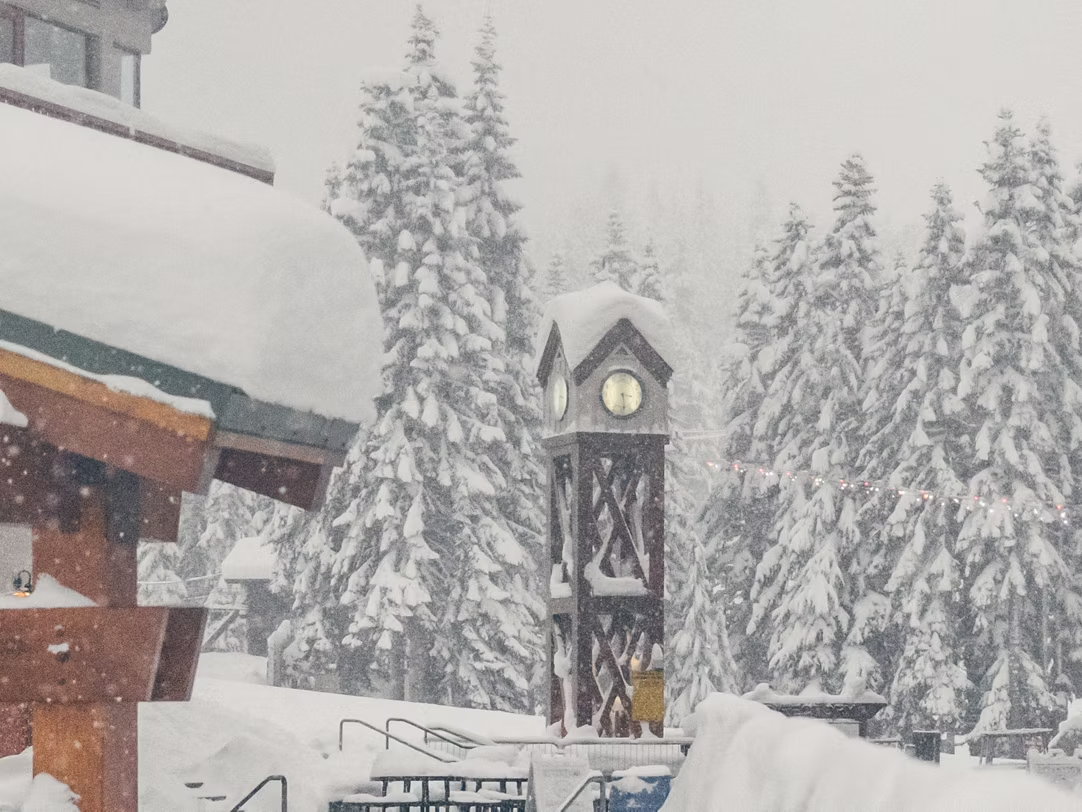
Lower-elevation resorts in Washington are especially vulnerable to warmer temperatures that cause rain. Snoqualmie sits at a relatively low elevation compared with many interior British Columbia resorts, meaning fluctuating weather can shorten seasons or affect snow quality.
“At Snoqualmie especially, the snow can be really hit or miss,” Roan Frank said. “Sometimes the resort opens late because it’s too warm and there’s no snow, and sometimes it rains midseason, which can cause closures. Sun Peaks usually has a longer season with better snow, but even they are starting to see some changes.”
Inconsistent snow and higher temperatures also change how people enjoy the resorts. Roan Frank said he has noticed fewer powder days and more icy or wet conditions in Washington.
“We get more wet snow and icy days than before,” Roan Frank said. “Powder days still happen, but they feel less frequent. In Canada, the snow is usually drier and better quality because it stays colder.”
These differences have influenced where and when he chooses to ski. When conditions are poor locally, he said he often waits to ski in British Columbia instead.
“If Washington conditions are bad, I’ll wait until I can go to Sun Peaks,” Roan Frank said. “My dad and I have started planning trips up to Canada more often instead of skiing locally all the time.”
Different snow conditions also have an impact on safety and on how well people perform on the mountain. When the snow is thin and there is a lot of ice, good skiers and snowboarders will have to be very careful, particularly at the start of the season when the resorts open with very little snow.
“When it’s icy, or there’s not much snow, you have to ski more carefully,” Roan Frank said. “You can’t really push yourself the same way. Early season can be risky because there are more exposed rocks and uneven terrain.”
Kevin Frank, Roan Frank’s father and an employee at a Washington ski shop, said changing winter conditions are also noticeable in the ski industry.
“When winters are inconsistent, it affects business too,” Kevin Frank said. “If resorts open late or have poor conditions, fewer people come in to buy gear or tune their skis. The whole industry kind of depends on a good snow season.”
He said warmer winters have made the ski season feel less predictable for both businesses and athletes.
“When snow is good, the shop gets busy right away,” Kevin Frank said. “But when the season starts late, everything slows down.”
While higher-elevation and more northern resorts often maintain better conditions, Roan Frank said warming winters could reshape the future of the sport, particularly for younger athletes.
“I think it could make skiing less accessible, especially in places like Washington, where elevations are lower,”Roan Frank said. “If seasons keep getting shorter, passes will get more expensive and fewer people might get into the sport.”
For athletes who spend much of their winters in the mountains, the impact of climate change feels personal.
“When you rely on snow every year and start noticing it’s less consistent, it makes climate change feel real,” Roan Frank said. “It’s not just something you read about anymore. You actually see it happening.”