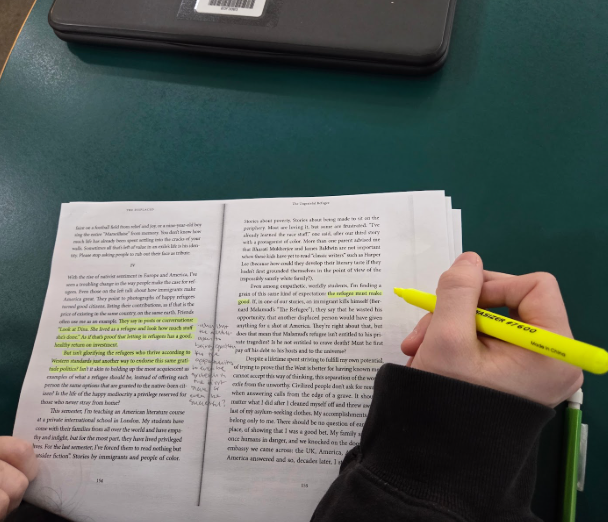
Digital devices play an increasingly important role in modern life. As schools, workplaces, and everyday activities become more technology-based, many books and reading materials have shifted to digital formats. While digital reading offers convenience and easy access, many students still say printed books provide a better overall reading experience, and research supports this. Recent studies show that despite the digital shift, physical paper remains a superior tool for comprehension and long-term focus
A study by Anandhi Deva Amirtharaj and other researchers surveyed 607 university students and found that 66.7% preferred printed books because they were easier to study from and take notes on. The study also found that 54% of students reported difficulty studying from digital copies.
Other research has also found differences in how people process information when reading on paper compared to screens. According to Kerry Benson of BrainFacts, reading printed material can activate several areas of the brain that support deeper comprehension and engagement.
A study by Noemí Bresó-Grancha and other researchers also examined how people read digital and printed texts. Their findings suggest that print reading can improve comprehension and help readers process information more effectively.
Some students believe printed books help them stay focused and avoid the distractions that often come with reading on screens. Others also report less eye strain when reading physical books compared to digital devices.
Mikhail Mashchits, an Edmonds College student, said he prefers printed books because digital reading feels less natural.
“I don’t really like e-books because I have to keep scrolling,” Mashchits said. “With printed books, it feels easier to read and follow along.”
Another Edmonds College student, Vadim Kruity, also said he prefers printed books, especially when studying for long periods of time.
“They don’t give me as many distractions, and my eyes hurt less because I’m not looking at a blue screen,” Kruity said.
Although digital reading offers convenience and portability, many students still feel that printed books provide a stronger and more comfortable reading experience. Printed books can help students stay focused during lengthy readings because they reduce screen distractions and make it easier to follow the text. Many students also find that studying from printed pages helps them take notes, remember information, and better prepare for exams. For these reasons, even as digital formats continue to grow, printed books remain an important tool for students who want a deeper and more effective reading experience.