More than one quarter of a million new college students enroll in Washington state college degrees each year, ushering in a great wave of young minds into preparing for their next phase of life: their careers. But how well prepared are these students, following years of elementary, middle and high school education? Are educational efforts more successful now then they were even a generation ago? The challenges facing new students are different then in the past, but whether our educational system has risen to these challenges remains to be seen. Are we at least getting our money’s worth? Several officials and data that tracks student achievement scores indicate that the answer is no.
The baseline success of an educational system comes down to four major components: the state budgetary support, the educational staff and teachers, the personal support system of each student, and of course, the students themselves. Together, these four elements help determine just how well prepared our students are, and how well they will be ready to either further their educational pursuits or enter the workforce. Evaluating students’ performance has been distilled into a simple formula, traditionally resulting in a grade from the exceptional A’s to the failing F’s. But the analysis of the system itself has proven far more challenging.
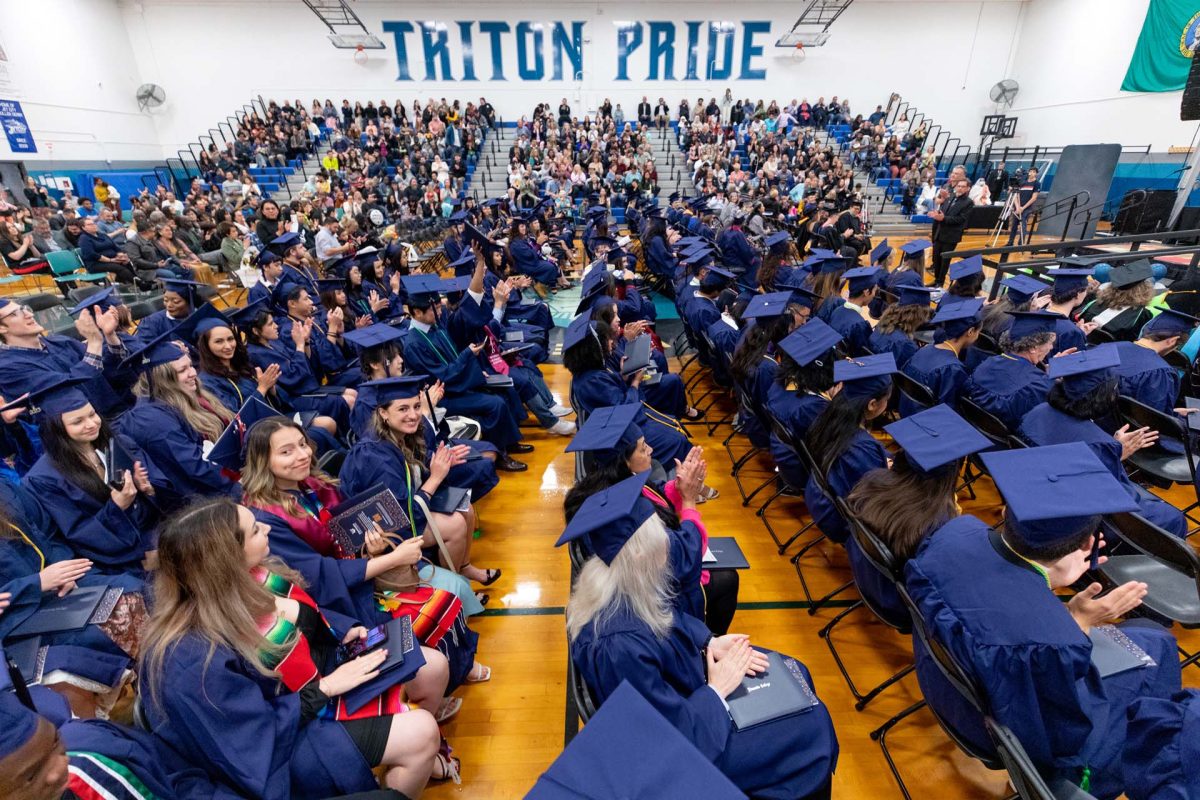
Quarter after quarter, new and old students alike walk through the doors of higher education in search of the tools they will need for success. Bethany Hamamoto, former director of Intercultural Engagement at the University of Washington, summarizes higher education as the launching point for many students to achieve their potential for occupational excellence.
“Everything is about transferrable skills and how you transfer those skills,” she said. “You go to college for the connections and opportunities, not just the education.”
But are students coming to college ready for these new challenges and opportunities? Statistics suggest that they are not. The Annie E Casey Foundation Data Center has monitored educational achievement scores, observing that Washington State has repeatedly delivered less than the national average in both reading comprehension as well as math. In 2015, Washington was ranked 20th in educational results; the latest rankings place the state in 27th overall. More than two-thirds of the state’s 4th graders failed to reach reading standards, and 70% of 8th graders were not proficient at math. This means that a majority of our students would be unlikely to understand the context or the numerical relevance of these very sentences which identify their discrepancies.
Dr. Stephan Blanford, the executive director of the Children’s Alliance of Seattle spoke with the Washington State Standard, indicating that the budgetary allocations for education are to blame. “The fact that our state has made such significant cuts in early education…means it’s pretty easy to predict that these numbers are on the way downward.”
Washington State currently boasts the fourth largest economy in the nation, with an annual budget of approximately $116 billion, an impressive amount when one considers Washington is one of the few states without a state income tax. However, the state funds its K-12 education at an amount which is only in the neighborhood of the national average: and when contrasting the amount of funding against the overall budget, Washington’s educational budget represents roughly 3.17 percent of available funds – below the national average. Worse, there is an “opportunity gap” in play, where a larger percentage of the available funds are allocated to low-poverty areas while less is given to high-poverty areas.
Adding to the financial challenges, the lack of state income revenue has placed extra reliance upon more creative plans for monetary distribution, including the city of Seattle effectively carrying the burden of providing the necessary funding for the rest of the state’s school districts. The Washington State Office of Financial Management indicates that over that same period of time, enrollment in public schools (K-12) has also increased slightly over that time frame, suggesting that the headcount has gone up while the financial investment has gone down.
Correlation is not causation, but relative budgetary allocation has gone down, and so have the student test results. For a better exploration of what connection might exist between our government’s investment in education and the actual outcome, we must look at the people who most directly observe and understand the challenges and results that await our students: the educators themselves. These front-line workers, given middle-income wages with aggressive oversight and a consistently diminishing support system, must bear the weight of this educational responsibility.
Local teacher Theo Moriarty looks into this system with his eyes wide open. Referring to the educational system as “the last mile of government service that most people will directly deal with” exposes the reality that a public educational system is, in fact, the aspect of our state and local administrations that connect its citizens into a pathway of success, molding our young into being a functional part of our society. Moriarty also drew attention to the concept of “learning loss” to highlight one of the systemic challenges facing our society as a whole, struggling to keep up with the needs of our society. During the COVID lockdowns, most public education was managed through remote learning, and the struggles to utilize technology as a defense against a changing educational landscape resulted in at least one full year of students receiving less than standard educations. It impacted the structure of in-person education itself, a fact that experts continue to explore as we try to improve how we prepare our students.
Technology has also offered some assistance other than remote teaching. Another local teacher, Kristi Riggin, pointed out that AI is being implemented in various resources, including a program called “Magic School”, which assists students explore material beyond the pages using their school-provided laptops. This would be impacted by a lack of internet access, however, but does represent a technological step forward. Most schools offer before and/or after school free tutoring, but this also bears the challenge of access: students who are dependent on school buses to get to and from school would be unable to utilize it. Moriarty and Riggin both admit to putting in more than 40 hours of work each, but Riggin stated, “you get good at what you spend time and effort into” – the same advice she gives to her students.
Riggin and Moriarty both point to fundamental changes in educational priorities as the cause for diminishing returns on Washington’s investment. Aside from the reduction in financial allocation, most states have shifted towards a more simplified approach to the evaluation of our educational readiness. Concepts like critical thinking, for example, have been brushed aside with the implication that higher education will accommodate these aspects later, rather than in a fundamental educational setting. Instead, a reliance upon easily-evaluated numerical results – standardized testing and enforcing the idea of teaching to the test – are given more focus than individually working with students and their families to develop personalized teaching programs to address whatever challenges each individual student might face.
In certain categories, our educational system points to some success stories to support the state’s approach. Scores in Advanced Placement (AP), as well as test results from college entrance exams like the SAT and ACT. Chris Reykdal, the Superintendent of Public Instruction, posted on the OSPI’s LinkedIn page, “Across the state, our students continue to push themselves in advanced courses and on advanced tests, and they continue to perform well above the national average,” Reykdal said. “These results are a true testament to the efforts of our students, educators, and families.”
College preparation, however, is more than a value achieved by tracking test scores. There are the fundamentals of understanding their role in their community, in their states and in their nation. Fiscal preparation including the tasks that many of us might take for granted – balancing a budget, applying for a job or a loan, and so forth – are aspects often brushed aside in favor of achieving better test scores. Sometimes, the numbers simply do not tell the whole story. But in this case, they do point in the general direction of areas that have room for improvement.